
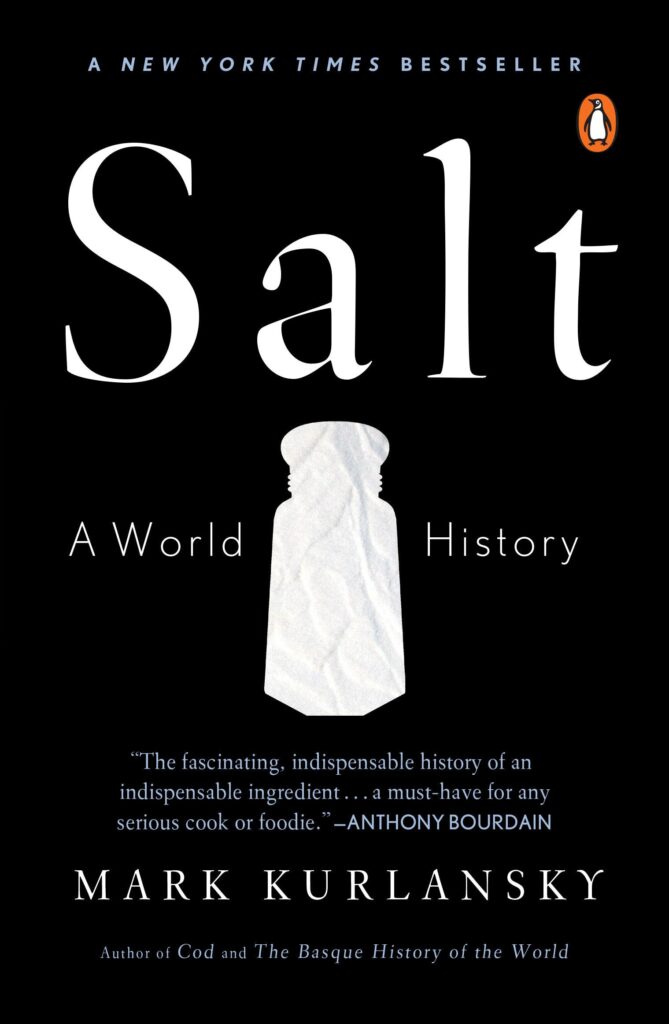
Salt: A World History
A single white crystal once commanded the power to build empires, finance wars, and ignite revolutions. In this New York Times bestseller, Mark Kurlansky traces the remarkable history of salt, the only rock humans eat, revealing how this humble mineral shaped the course of civilization itself.
From ancient China, where the first natural gas was harnessed to fuel saltworks, to Gandhi's legendary 1930 Salt March that helped topple British rule in India, Kurlansky weaves together a tapestry of colorful characters and surprising connections. Salt served as currency, established trade routes, and gave rise to great cities. It preserved food for millennia before refrigeration existed and became so valuable that governments built entire economies around its taxation.
Kurlansky, the award-winning author, proves himself a master storyteller. He brings to life the Roman soldiers paid in salt (giving us the word "salary"), the elaborate underground salt mines of Poland, and the brutal salt-driven slavery in the Americas. The book includes historical recipes that bring each era to vivid life.
Filled with fascinating details and meticulously researched history, Salt transforms an everyday substance into an epic journey through time. This is the story of how something so common was once worth dying for.
Interesting Facts
The Only Rock You Eat: Salt is the only rock humans consume. Kurlansky opens with this simple but profound truth, then unfurls thousands of years of civilization shaped by this humble mineral.
Salt Sparked Revolutions: The book reveals how salt taxes helped ignite both the American and French Revolutions. In France, the despised gabelle tax on salt symbolized government oppression and fueled the uprising.
Gandhi's Famous March: Kurlansky details how Gandhi led thousands of Indians on an exhausting 240-mile march to the sea in 1930. They made their own salt to protest British taxes, and this peaceful act helped end colonial rule in India.
Roman Soldiers Paid in Salt: The word "salary" comes from the Latin word for salt. Roman soldiers were sometimes paid in salt, giving us expressions like "worth his salt."
Translated into Twenty Languages: The book became a New York Times bestseller and has been translated into more than twenty languages. It was also a finalist for the James Beard Award for food writing.
Kurlansky Illustrated It Himself: The author personally created the illustrations for the book. This adds a charming, personal touch to the historical narrative.
Recipes Scattered Throughout: Kurlansky sprinkles ancient recipes from around the globe into the text. You'll find everything from Roman fish sauce to the origins of ketchup.
Oil Discovered at Salt Dome: The book tells how Anthony Lucas drilled a Texas salt dome called Spindletop in 1901. He struck oil and essentially gave birth to the modern petroleum industry.
Venice Built on Salt Wealth: Salt trade maintained Venice's palatial public buildings and its complex hydraulic system. The city's dominance as a commercial force in Europe was built on this white gold.
Published Before the Pink Salt Craze: The book came out in 2002, years before Himalayan pink salt became trendy. It remains a relevant and fascinating read about our complicated relationship with this humble mineral.
Quotes
"Salt is so common, so easy to obtain, and so inexpensive that we have forgotten that from the beginning of civilization until about 100 years ago, salt was one of the most sought-after commodities in human history." - Mark Kurlansky
"When the war finally ended, and Generals Ulysses S. Grant and Robert E. Lee sat down to talk, Lee said that his men had not eaten in two days and asked Grant for food. According to some observers, when the Union supply wagons were pulled into sight, the defeated soldiers of the famished Army of Northern Virginia let out a cheer." - Mark Kurlansky
"Trade in salted food would shape economies for the next four millennia." - Mark Kurlansky
"Kement a zo fall, a gar ar sall—Everything that is not good asks to be salted. Everything from meat to butter to potatoes was salted. Salt was Brittany’s cheapest product, the one everyone could afford." - Mark Kurlansky
"When the Basque whalers applied to cod the salting techniques they were using on whale, they discovered a particularly good marriage because the cod is virtually without fat, and so if salted and dried well, would rarely spoil." - Mark Kurlansky
"THE ROMANS SALTED their greens, believing this to counteract the natural bitterness, which is the origin of the word salad, salted." - Mark Kurlansky
"MORE THAN A gastronomic development, the salting of fowl and especially of fish was an important step in the development of economies." - Mark Kurlansky
"Now they [The Basques] started salting cod. The market was enormous." - Mark Kurlansky
"The difference between fresh cheese and aged cheese is salt." - Mark Kurlansky
"The Swedes had a wealth of herring, but nothing with which to salt it." - Mark Kurlansky
"The Celts were innovators. The Romans were nation builders." - Mark Kurlansky
"The ancient Egyptians may have been the first to cure meat and fish with salt." - Mark Kurlansky
Ratings & Reviews
What do you think?
There are no reviews yet. Be the first one to write one.