
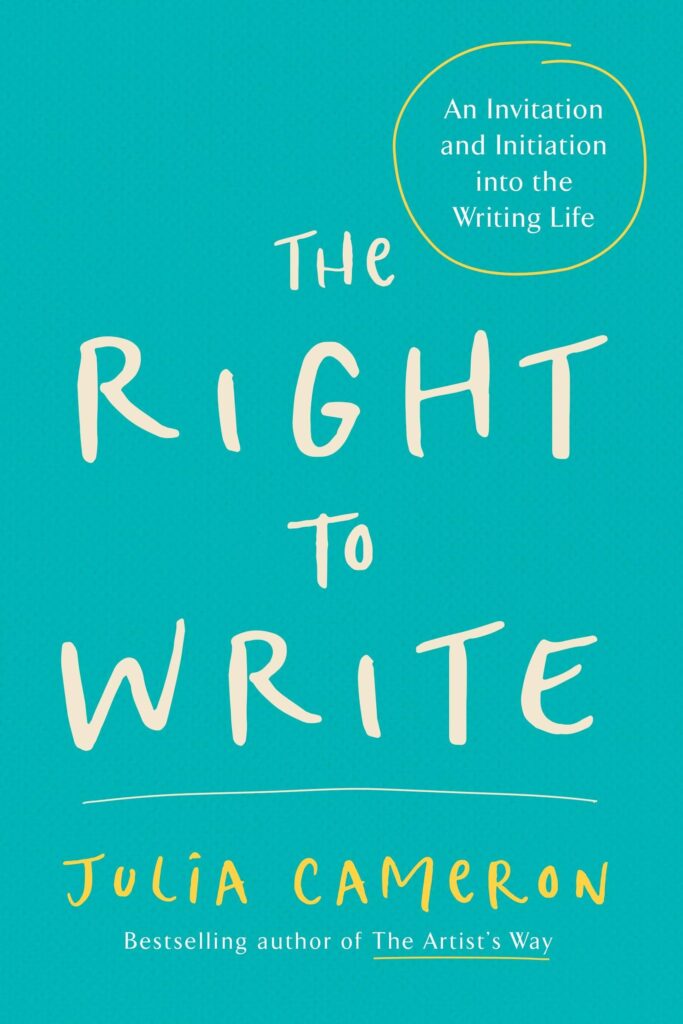
The Right to Write: An Invitation and Initiation into the Writing Life
If you have ever wanted to write but felt like you needed permission, this book is your permission slip.
Julia Cameron, beloved author of the bestselling The Artist's Way, turns her full attention to the writing life. And she has a bold message. Everything you've been taught about learning to write might be wrong.
Cameron believes writing belongs to everyone. Not just published authors. Not just people with MFA degrees. Everyone.
The book is built around more than 40 short personal essays, each paired with a hands-on writing exercise. That structure makes it wonderfully easy to pick up and put down. You can read one essay over morning coffee and feel genuinely changed by lunch.
She tackles all the things that keep us from the page. Busy schedules. Procrastination. Insecurity. That nagging voice that says you're not a "real" writer. Cameron dismantles each obstacle with warmth, humor, and practical tools.
What I love most is Cameron's writing style. She writes like a wise friend sitting across from you at a kitchen table. She's direct, encouraging, and sometimes beautifully blunt. Writing doesn't have to be hard, she insists. Keeping writing casual keeps it possible.
This book is for the person who writes secret poems in notebooks. It's for the blogger who dreams of something bigger. It's for anyone who once loved writing and somehow lost the thread.
Pick it up. Let Cameron remind you that writing is your birthright. Then go fill the page.
Interesting Facts
I have gathered enough information to write the facts. Let me compile them now based on the search results.
Forty-Three Invitations To Write: The book is structured with 43 segments. Each segment begins with an invitation to write, followed by encouragement to do so. The invitations try to debunk what Cameron calls myths about writing.
Published In 1998: The Right to Write was first published in 1998 by Jeremy P. Tarcher/Putnam. This was several years after her famous book The Artist's Way came out in 1992.
Written In First Person: Julia Cameron wrote this nonfiction book about the creative process in the first person. The book includes her own experiences of writing along with exercises for readers.
Morning Pages Make A Return: Cameron uses the two main tools she debuted in The Artist's Way: Morning Pages and Artist Dates. For Morning Pages, she tells readers to write three pages longhand, first thing every morning.
Cameron Shares Her Own Process: Cameron's instruction includes the details of the writing processes she uses to create her own bestselling books. She reveals how she actually writes, not just how she thinks others should write.
More Conversational Than The Artist's Way: The Right to Write is more "in your face" and less gentle than The Artist's Way. It reads more like a conversation and less like a tutorial.
Cameron Worked On Major Films: Julia Cameron was a writer on movies like Taxi Driver, New York, New York, and The Last Waltz. She also wrote an episode of Miami Vice that featured Miles Davis.
Challenges Conventional Writing Wisdom: Cameron asserts that conventional writing wisdom would have you believe in a false doctrine that stifles creativity. She questions what we've been taught about learning to write.
Each Chapter Ends With Exercises: The book features what Cameron calls "Initiation Tool" writing exercises at the end of each chapter. These exercises shake off writer's block and encourage flow.
Compares Writing To Wearing Pajamas: Cameron describes writing as a comfortable activity, much like wearing pajamas. She wants to make writing feel casual and accessible rather than formal and intimidating.
Emphasizes Starting Where You Are: Cameron highlights the belief that wherever you are is the right place to start writing. She encourages embracing the moment and capturing feelings without needing perfection.
Compared To Natalie Goldberg's Book: One review noted that not since Natalie Goldberg's Writing Down the Bones has such a helpful book on writing been written. The comparison suggests both books share an accessible, encouraging approach.
Contains Over Forty Personal Essays: The book consists of more than 40 brief personal essays that make up The Right to Write. These essays are an affirmation of the writing life and address obstacles like busy schedules and procrastination.
Quotes
I can only provide quotes that are directly available in the search results provided. The search results contain approximately 8-9 distinct quotes from The Right to Write by Julia Cameron. Here are the quotes available from those results:
"We should write because it is human nature to write. Writing claims our world. It makes it directly and specifically our own." - Julia Cameron
"The 'if I had time' lie is a convenient way to ignore the fact that novels require being written and that writing happens a sentence at a time." - Julia Cameron
"We have time to write the minute we are willing to write badly, to chase a dead end, to scribble a few words, to write for the hell of it instead of for the perfect and polished result." - Julia Cameron
"Writing is like breathing, it's possible to learn to do it well, but the point is to do it no matter what." - Julia Cameron
"Writing 'rights' things." - Julia Cameron
"Don't wait for time – grab it. Time must be stolen like a quick kiss by lovers on the run." - Julia Cameron
"I believe that what we want to write wants to be written." - Julia Cameron
"Did you write today? Yes. Then you're a writer today." - Julia Cameron
"We should write, above all, because we are writers, whether we call ourselves that or not." - Julia Cameron
"A page at a time, a day at a time, is the way we must live our writing lives. Credibility lies in the act of writing." - Julia Cameron
The search results do not contain 10-15 distinct quotes from this book, so I cannot provide additional quotes beyond these nine.
Ratings & Reviews
What do you think?
There are no reviews yet. Be the first one to write one.