
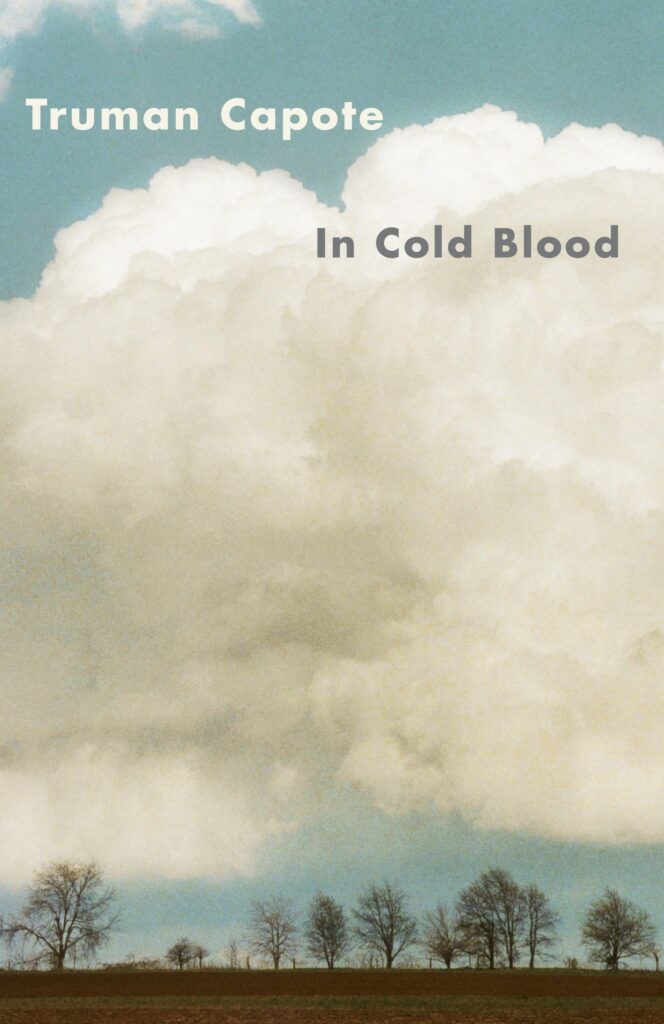
In Cold Blood
On November 15, 1959, in the quiet farming town of Holcomb, Kansas, four members of the Clutter family were brutally murdered in their home. There was no apparent motive, almost no clues, and a community left shattered by an act of violence that seemed impossible in the heartland of America.
Truman Capote learned of the killings and traveled to Kansas with his childhood friend Harper Lee to investigate. What followed was six years of meticulous research, thousands of pages of notes, and intimate interviews with the killers themselves, Richard Hickock and Perry Smith. The result was something entirely new: a nonfiction novel that reads with the tension and artistry of great fiction while remaining anchored in devastating truth.
In Cold Blood takes you inside the lives of both victims and murderers with astonishing empathy and precision. Capote reconstructs the Clutters' final day, follows the killers across the country as they flee, and chronicles the investigation that led to their capture, trial, and execution. The book explores the darkest corners of the American psyche, examining violence, justice, and the thin line between civilization and chaos.
Considered the masterwork that defined the true crime genre, In Cold Blood remains as powerful and haunting today as when it was first published in 1966. This is literary journalism at its finest, a book that will stay with you long after you turn the final page.
Interesting Facts
Six Years in the Making: Capote spent six years researching and writing In Cold Blood, arriving in Kansas just weeks after the November 1959 murders and staying with the story until after the killers were executed in April 1965. This exhaustive process took such an emotional toll on him that he never published another book again.
Harper Lee Was the Secret Weapon: Capote brought his childhood friend Harper Lee (who had just finished To Kill a Mockingbird) to Kansas as his research assistant. The locals found Capote's flamboyant personality off-putting, but Lee's Southern charm and understanding of small-town life helped open doors. She contributed 150 pages of notes, yet Capote only acknowledged her in the dedication, which deeply hurt their friendship.
8,000 Pages of Notes: Capote compiled a staggering 8,000 pages of research notes for the book. He claimed to have amassed files and memorabilia that would fill a small room from floor to ceiling, conducting exhaustive interviews with anyone connected to the case.
The Memory Method: Capote never used a tape recorder or took notes during interviews, believing it would artificialize the atmosphere. He trained himself for years to memorize conversations by having friends read passages from books and then transcribing them from memory. He claimed he could recall six-hour conversations with over 90 percent accuracy.
Invented the Nonfiction Novel: Capote called In Cold Blood a "nonfiction novel," combining journalistic facts with literary techniques like dialogue, scene-setting, and character development. While others had experimented with the form before, Capote popularized it and essentially created the modern true crime genre. It's the second-bestselling true crime book ever, behind only Helter Skelter.
The Famous Graveyard Scene Never Happened: Despite Capote's claims of complete factual accuracy, he invented at least two scenes, including the poignant final graveyard conversation between detective Alvin Dewey and Nancy Clutter's friend. Dewey himself confirmed this scene was pure fiction. Critics later discovered Capote made close to 5,000 changes between the New Yorker serialization and the book version.
First Published in The New Yorker: The book appeared as a four-part series in The New Yorker in 1965 before being published as a book in January 1966. The New Yorker copies sold out immediately in Kansas, creating a sensation. The magazine included an editor's note claiming all quotations were either from official records or transcribed verbatim, though this proved untrue.
The Killers Got Only $50: Richard Hickock and Perry Smith murdered the four members of the Clutter family based on a false tip about a safe containing $10,000. In reality, there was no safe, and they left with less than $50 in cash, a portable radio, and a pair of binoculars. The senselessness of the crime for such a small amount haunted the investigation.
Capote Paid His Sources: Notebooks reveal that Capote paid Harper Lee $900 for her research assistance (nearly $10,000 in today's money). He also paid the killers Perry Smith and Dick Hickock $100 each while they were in prison, raising ethical questions about checkbook journalism.
A Pulitzer Prize Snub: Despite its massive critical and commercial success, In Cold Blood did not win the Pulitzer Prize or the National Book Award, which deeply disappointed Capote for the rest of his life. However, it did win the 1966 Edgar Allan Poe Award from the Mystery Writers of America.
Three Major Film Adaptations: The book inspired three significant films. The 1967 version directed by Richard Brooks was nominated for four Academy Awards. The 2005 film Capote, focusing on the book's creation, won Philip Seymour Hoffman the Best Actor Oscar for his portrayal of Capote. A competing 2006 film, Infamous, covered the same ground but was overshadowed.
The Book Destroyed a Friendship: Capote's jealousy over To Kill a Mockingbird's success and his failure to properly credit Lee for her work on In Cold Blood permanently damaged their childhood friendship. As Lee later wrote, "I was his oldest friend, and I did something Truman could not forgive: I wrote a novel that sold. He nursed his envy for more than 20 years." By the time Capote died in 1984, they were estranged.
Quotes
"The village of Holcomb stands on the high wheat plains of western Kansas, a lonesome area that other Kansans call 'out there.'"
"The land is flat, and the views are awesomely extensive; horses, herds of cattle, a white cluster of grain elevators rising as gracefully as Greek temples
Ratings & Reviews
What do you think?
There are no reviews yet. Be the first one to write one.