
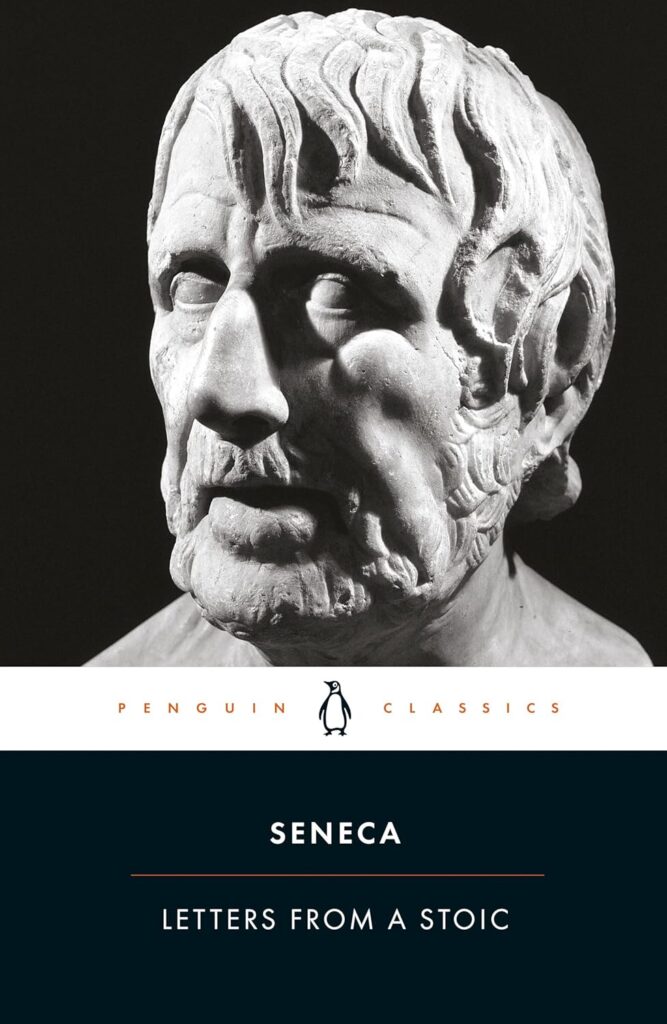
Letters from a Stoic
Nearly two thousand years ago, a man who advised emperors and survived exile wrote letters that would outlast the Roman Empire itself. Seneca the Younger, one of history's most influential Stoic philosophers, penned 124 letters to his friend Lucilius that remain strikingly relevant today.
Written during the final years of his life, these intimate letters offer practical wisdom on how to live well. Seneca tackles timeless questions: How do we face death? What makes a true friend? How can we find peace amid chaos? Beginning with observations from daily life, each letter transforms ordinary moments into profound meditations on virtue, resilience, and the human condition.
Seneca was no detached academic. He served as advisor to Emperor Nero and accumulated vast wealth, yet his philosophy emphasizes that inner tranquility matters more than external fortune. His letters criticize the cruelties of gladiatorial combat and the harsh treatment of slaves, revealing a surprisingly modern moral sensibility.
Whether you're navigating career pressures, personal loss, or simply seeking a more meaningful life, Seneca's words offer guidance that has inspired readers for centuries. His wit and humanity shine through every page, making ancient philosophy feel like a conversation with a wise friend.
This is not dusty philosophy. This is a manual for living.
Interesting Facts
Written To A Friend: The book consists of 124 letters Seneca wrote to Lucilius Junior, who was the procurator of Sicily at the time. Scholars debate whether these were genuine private letters or literary essays disguised as correspondence, since there's no evidence of Lucilius writing back.
Started Each Letter the Same: Every letter begins with the same formal Latin greeting, "Seneca Lucilio suo salutem," which means "Seneca wishes health to his friend Lucilius." They all end with the simple word "Vale," meaning "Farewell" or literally "be strong."
Penned During Retirement: Seneca wrote these letters at the end of his life, during his retirement after serving Emperor Nero for more than ten years. The letters were composed over approximately two to three years, from around 63 to 65 AD.
First English Translation In 1614: Thomas Lodge created the first recorded full English translation of all 124 letters in 1614. Since then, the work has been translated many times, with popular modern versions including Robin Campbell's 1969 Penguin edition.
Early Letters Featured Epicurus Quotes: The first 30 or so letters often concluded with a maxim or wise saying to meditate on. Seneca frequently quoted Epicurus, the founder of a rival philosophy, which he considered a beginner's technique for teaching wisdom.
Addressed Everyday Roman Life: The letters cover surprisingly practical topics like "On Noise," dealing with noisy neighbors, asthma, seasickness, and even attending gladiatorial games. They offer valuable glimpses into daily life in ancient Rome.
First Moral Critique Of Gladiators: In Letter 7, Seneca describes visiting an arena where gladiators fought to the death. He then questions the morality and ethics of such spectacles. This is the first known record of a pre-Christian writer expressing moral concerns about gladiatorial combat.
Letters Grew Longer Over Time: The letters tend to become progressively longer as the collection continues, with some short ones interspersed throughout. Later letters increasingly focus on theoretical philosophical questions rather than everyday observations.
Quotes Latin Poets Frequently: Throughout the letters, Seneca quotes extensively from Latin poets, especially Virgil, but also Ovid, Horace, and Lucretius. He also cites Publilius Syrus and other ancient writers to illustrate his philosophical points.
Death Looms Throughout: A concern with death runs through many of the letters, reflecting both Stoic philosophy and Seneca's deteriorating political position. Seneca famously observed that we are "dying every day," and suicide was a key consideration given Nero's habit of forcing enemies to kill themselves.
Became His Longest Work: Collectively, the 124 letters constitute Seneca's longest surviving work. The collection originally had at least 22 manuscript volumes, though some letters from later books have been lost over the centuries.
Written Months Before His Death: The final letters were written less than a year before Seneca's forced suicide in 65 AD. Letter 91 mentions a fire in Lyon that occurred in the spring of 65, just months before Nero ordered Seneca to take his own life.
The Shortness of Life: One letter famously argues that life is long enough if we stop wasting it on trivial pursuits and meaningless distractions.
Quotes
"If you really want to escape the things that harass you, what you're needing is not to be in a different place but to be a different person." - Seneca
"If you live in harmony with nature you will never be poor; if you live according what others think, you will never be rich." - Seneca
"What progress, you ask, have I made? I have begun to be a friend to myself." - Seneca
"Of this one thing make sure against your dying day - that your faults die before you do." - Seneca
"It does not matter what you bear, but how you bear it." - Seneca
"For many men, the acquisition of wealth does not end their troubles, it only changes them." - Seneca
"We suffer more often in imagination than in reality." - Seneca
"You should live in such a way that there is nothing which you could not as easily tell your enemy as keep to yourself." - Seneca
"Until we have begun to go without them, we fail to realize how unnecessary many things are. We've been using them not because we needed them but because we had them." - Seneca
"To enjoy life, we must touch much of it lightly." - Seneca
"Nothing is burdensome if taken lightly, and nothing need arouse one's irritation so long as one doesn't make it bigger than it is by getting irritated." - Seneca
"To win true freedom you must be a slave to philosophy." - Seneca
"Regard a friend as loyal, and you will make him loyal." - Seneca
"To be everywhere is to be nowhere." - Seneca
"A gem cannot be polished without friction, nor a man perfected without trials." - Seneca
Ratings & Reviews
What do you think?
There are no reviews yet. Be the first one to write one.