
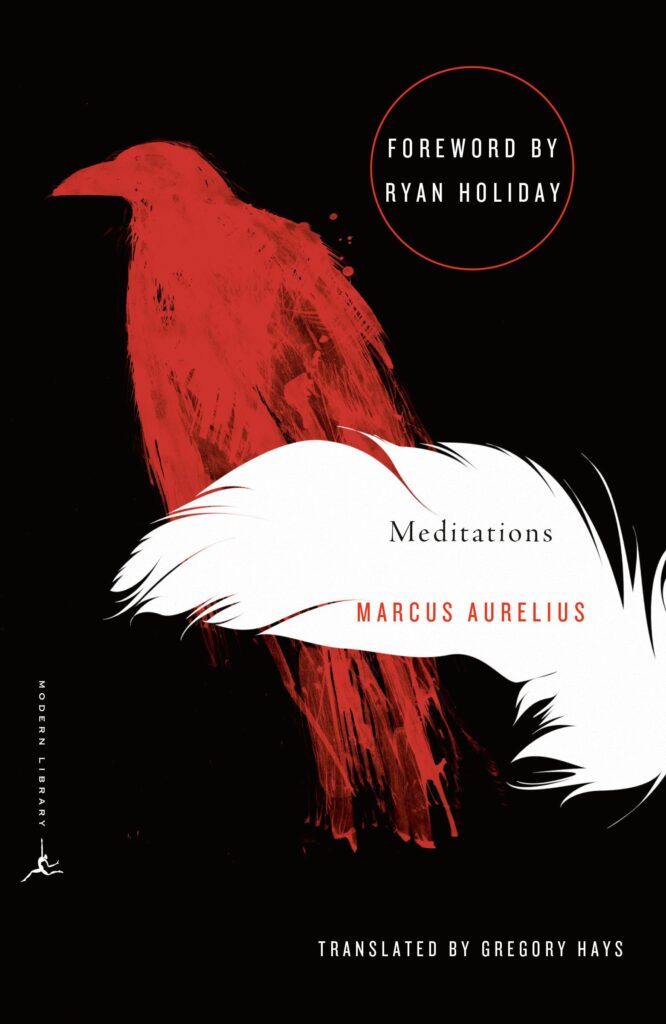
Meditations
The private journal of the most powerful man in the ancient world - never meant to be read by anyone.
Nearly two thousand years ago, the most powerful man on Earth sat alone in his military tent, writing private notes that would change millions of lives.
Marcus Aurelius was Roman Emperor from 161 to 180 CE, commanding vast armies and ruling over an empire stretching across three continents. Yet in the midst of brutal wars against Germanic tribes along the Danube frontier, he found time each night to write philosophical reflections meant only for himself. These personal journals, written in Greek rather than Latin, became the 12 books we now call Meditations.
Marcus drew heavily from Stoic philosophy, particularly the teachings of Epictetus, to remind himself how to remain calm, virtuous, and focused on what truly matters.
The work covers themes that remain strikingly relevant today: accepting what lies beyond our control, finding inner peace amid chaos, confronting mortality with courage, and treating others with justice and understanding. Marcus writes about duty, resilience, and the fleeting nature of fame and fortune.
Meditations has been treasured by leaders throughout history. Theodore Roosevelt carried it into the Amazon jungle. General James Mattis took it on military deployments. It has been called one of the great books of all time.
Open to any page. Find something that changes how you think today.
Interesting Facts
Never Intended For Publication: Marcus Aurelius wrote these reflections purely for himself, using them for his own guidance and self-improvement. He had no idea his private journal would become one of history's most beloved books.
Written In Ancient Greek: Though Marcus was a Roman emperor, he chose to write in Koine Greek rather than Latin. This shows how deeply Greek culture had merged with Roman life by the second century.
Original Title Means "To Himself": The Greek manuscript used for the first printed edition bore the title "Ta eis heauton," which translates as "Things Unto Himself" or "To Himself." This perfectly captures the private, personal nature of the work.
Composed During Military Campaigns: Marcus wrote these reflections while leading brutal wars against Germanic tribes along the Danube River. He penned them between 170 and 180 AD, often at military bases like Carnuntum and Sirmium, and even while campaigning in barbarian territory.
Lost For 700 Years: After Marcus died in 180 AD, the Meditations vanished from historical record. The first clear mention comes from around 900 AD when a Byzantine bishop named Arethas discovered an ancient, crumbling manuscript and had it copied.
Twelve Books Of Wisdom: The work is divided into twelve books with no clear chronological or thematic organization. The entries range from single sentences to long paragraphs, reflecting the spontaneous nature of his journaling.
First English Translation In 1634: Meric Casaubon published the first English translation, more than 1,400 years after Marcus wrote it. The work has since been translated countless times, with Gregory Hays's 2002 version becoming particularly popular.
A Roman Emperor's Bedtime Ritual: Marcus practiced spiritual exercises almost every night, writing down reminders to make himself humble, patient, empathetic, generous, and strong. These weren't grand philosophical treatises but practical tools for self-improvement.
Book One Is Different: The first book stands apart from the rest. It's more structured and autobiographical, with Marcus expressing gratitude to relatives, teachers, and mentors who shaped his character and introduced him to philosophy.
Inspired By A Former Slave: The emperor's greatest philosophical influence was Epictetus, a man born into slavery who later became Rome's most famous Stoic teacher. Marcus studied Epictetus's Discourses intensely and endeavored throughout his life to live by those teachings.
Theodore Roosevelt's Amazon Companion: When the former president explored the Amazon jungle for eight months, he brought only eight books. Two of them were Marcus Aurelius's Meditations and Epictetus's Enchiridion.
Read By World Leaders Today: Bill Clinton reportedly reads it once a year. Chinese Premier Wen Jiabao claimed to have read it over one hundred times. General James Mattis carried it on deployments in Iraq, Afghanistan, and the Persian Gulf.
Quotes
"You have power over your mind - not outside events. Realize this, and you will find strength." - Marcus Aurelius
"Reject your sense of injury and the injury itself disappears." - Marcus Aurelius
"How much more grievous are the consequences of anger than the causes of it." - Marcus Aurelius
"The impediment to action advances action. What stands in the way becomes the way." - Marcus Aurelius
"Everything we hear is an opinion, not a fact. Everything we see is a perspective, not the truth." - Marcus Aurelius
"When you arise in the morning think of what a privilege it is to be alive, to think, to enjoy, to love." - Marcus Aurelius
"The soul becomes dyed with the colour of its thoughts." - Marcus Aurelius
"Dig within. There lies the well-spring of good: ever dig, and it will ever flow." - Marcus Aurelius
"Your mind will be like its habitual thoughts; for the soul becomes dyed with the colour of its thoughts." - Marcus Aurelius
"Waste no more time arguing about what a good man should be. Be one." - Marcus Aurelius
"Choose not to be harmed — and you won’t feel harmed. Don’t feel harmed — and you haven’t been." - Marcus Aurelius
"If you are distressed by anything external, the pain is not due to the thing itself, but to your estimate of it; and this you have the power to revoke at any moment." - Marcus Aurelius
"The best revenge is to be unlike him who performed the injury." - Marcus Aurelius
"The happiness of your life depends upon the quality of your thoughts." - Marcus Aurelius
Ratings & Reviews
What do you think?
There are no reviews yet. Be the first one to write one.