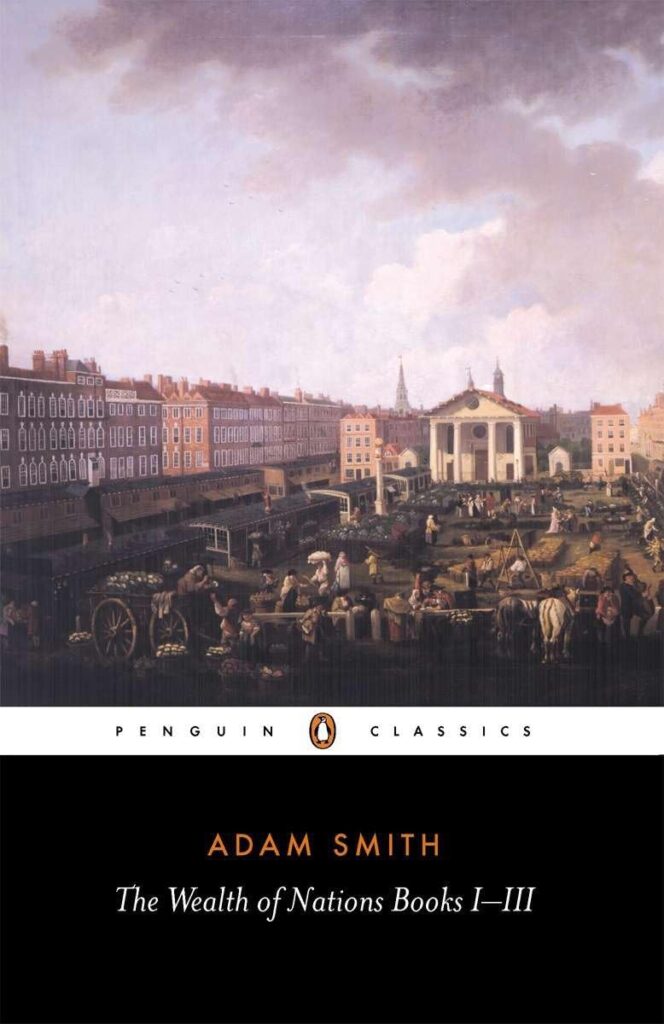
The Wealth of Nations
One book changed how the entire world thinks about money, trade, and prosperity.
Published in 1776, Adam Smith's masterwork created the science of economics. Through vivid examples like his famous pin factory, Smith reveals how the division of labor transforms productivity and how free markets create wealth for entire nations, not just merchants and kings.
Smith introduced revolutionary ideas that still shape our world: the invisible hand guiding markets, the power of competition, and the true nature of national wealth. His insights influenced America's Founding Fathers, British Prime Ministers, and even Karl Marx. It challenged the ruling economic theories of its time and provided the intellectual framework for capitalism and free enterprise.
The first edition sold out in six months. Nearly 250 years later, this book remains essential reading for anyone who wants to understand capitalism, global trade, and the forces driving modern economies.
Interesting Facts
Published the Same Year as America's Independence: The Wealth of Nations hit bookstores on March 9, 1776, the exact same year America declared independence. These two historic texts appeared within months of each other, making 1776 a watershed moment for both political and economic freedom.
Started as University Lectures: The material in Books 1-3 was originally delivered as lectures at the University of Glasgow, where Smith was a professor. He transformed classroom teachings into a world-changing treatise.
The First Edition Vanished in Six Months: Smith's publisher printed somewhere between 500 and 750 copies for the first edition. Every single copy sold out within six months, shocking everyone including Smith himself, who worried the dense economic treatise would be too challenging for most readers.
Benjamin Franklin Heard Chapters Before Publication: Smith read draft chapters of The Wealth of Nations to Benjamin Franklin during Franklin's time in London. The two men became friends and discussed economic ideas together, with Franklin's thoughts on the American colonies likely influencing Smith's work.
The Book Took Twelve Years to Write: Smith began writing in 1764 during his time in France, where he met Voltaire and French economists. He spent the next decade refining his ideas in Scotland before finally publishing in 1776. Some scholars believe he contemplated the work for twelve years before even starting.
The Pin Factory Was Borrowed: Smith's famous pin factory example wasn't based on personal observation. He drew from French sources describing pin manufacturing, and modern scholars have discovered he misunderstood some details. The actual pin factories operated quite differently from his idealized account.
Invisible Hand Appears Once: Despite its fame, the phrase "invisible hand" appears only once in the entire Wealth of Nations. Smith used it to describe merchants naturally preferring domestic investment over foreign ventures.
It Influenced Both Sides of Every Debate: Karl Marx studied The Wealth of Nations intensely while developing his critiques of capitalism. Meanwhile, free market advocates claimed Smith as their patron saint. The book became ammunition for opposing economic philosophies, each finding different passages to support their views.
Oxford Inspired a Critique: Smith's disappointing experience at Oxford, where professors barely taught, inspired him to suggest that professors should be paid based on how many students they attract.
Five Editions in His Lifetime: Smith revised the work carefully, publishing five editions between 1776 and 1789. The differences between the second and third editions were especially major.
Named Among Scotland's Best: In 2005, The Wealth of Nations was recognized among the 100 Best Scottish Books of all time, cementing its place in literary and intellectual history.
Quotes
"Nobody ever saw a dog make a fair and deliberate exchange of one bone for another with another dog." - Adam Smith
"It is not from the benevolence of the butcher, the brewer, or the baker that we expect our dinner, but from their regard to their own interest. We address ourselves, not to their humanity, but to their self-love, and never talk to them of our own necessities, but of their advantages." - Adam Smith
"Civil government, so far as it is instituted for the security of property, is in reality instituted for the defence of the rich against the poor, or of those who have some property against those who have none at all." - Adam Smith
"Labour was the first price, the original purchase-money that was paid for all things. It was not by gold or by silver, but by labour, that all the wealth of the world was originally purchased." - Adam Smith
"With the greater part of rich people, the chief enjoyment of riches consists in the parade of riches." - Adam Smith
"The natural effort of every individual to better his own condition is so powerful, that it is alone, and without any assistance, not only capable of carrying on the society to wealth and prosperity, but of surmounting a hundred impertinent obstructions with which the folly of human laws too often encumbers its operations." - Adam Smith
"There is no art which one government sooner learns of another than that of draining money from the pockets of the people." - Adam Smith
"The subjects of every state ought to contribute toward the support of the government, as nearly as possible, in proportion to their respective abilities; that is, in proportion to the revenue which they respectively enjoy under the protection of the state." - Adam Smith
"It is the great multiplication of the productions of all the different arts, in consequence of the division of labour, which occasions, in a well-governed society, that universal opulence which extends itself to the lowest ranks of the people." - Adam Smith
"Wherever there is great property there is great inequality. For one very rich man, there must be at least five hundred poor, and the affluence of the few supposes the indigence of the many." - Adam Smith
"No society can surely be flourishing and happy, of which the greater part of the members are poor and miserable." - Adam Smith
"The real price of everything, what everything really costs to the man who wants to acquire it, is the toil and trouble of acquiring it." - Adam Smith
Ratings & Reviews
What do you think?
There are no reviews yet. Be the first one to write one.