
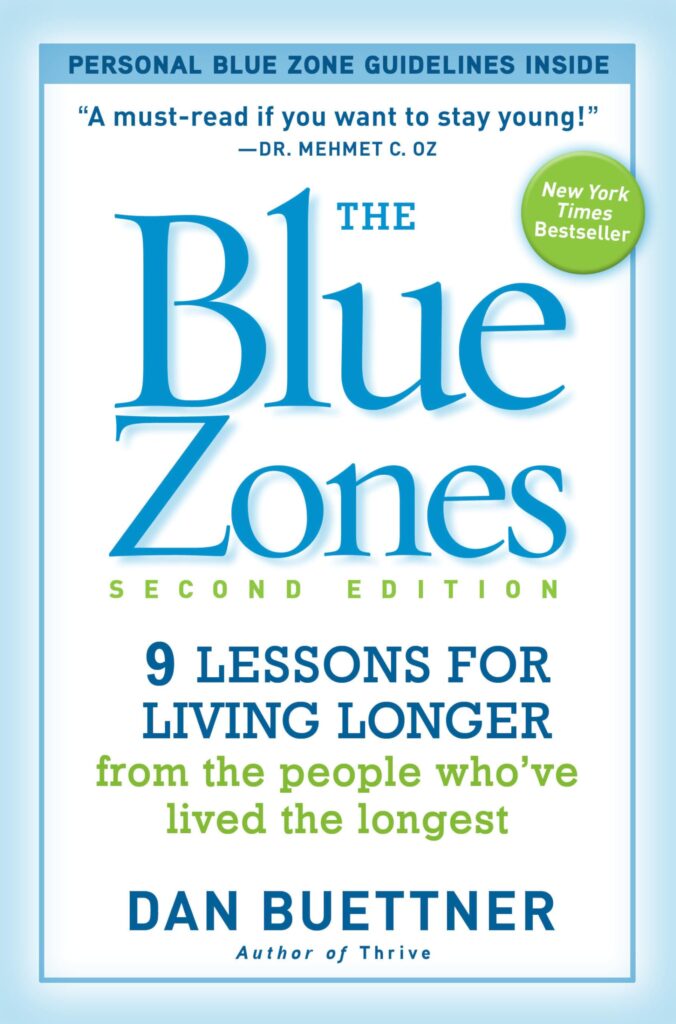
The Blue Zones: 9 Lessons for Living Longer From the People Who've Lived the Longest
What if you could add a decade of healthy, vibrant years to your life by learning from the world's oldest people? In this New York Times bestseller, National Geographic Explorer Dan Buettner takes you on an extraordinary journey to five remarkable regions where people routinely live past 100. From a 102-year-old Sardinian who hikes six miles daily to centenarian grandmothers in Okinawa, Japan, you'll meet real people whose simple habits hold powerful secrets.
Buettner and his team of researchers identified these longevity hotspots, called Blue Zones, in Sardinia, Italy; Okinawa, Japan; Loma Linda, California; Nicoya, Costa Rica; and Ikaria, Greece. What they found was remarkable: people reaching age 100 at ten times the rate of Americans, with lower rates of chronic disease.
The recipe for longevity isn't complicated. It's deeply connected to community, purpose, and daily rituals. Through captivating stories and scientific research funded in part by the National Institute on Aging, Buettner distills nine powerful lessons that anyone can embrace.
Studies suggest only about 25 percent of how long we live is determined by genetics. The other 75 percent comes down to lifestyle choices. This book shows you exactly which choices matter most. Whether it's finding your sense of purpose, building the right social circle, or learning when to put down your fork, these time-tested practices can transform your health starting today.
Interesting Facts
Five Longevity Hotspots Discovered: Dan Buettner teamed with National Geographic and the National Institute on Aging to identify five regions where people reach age 100 at ten times the rate of Americans. These Blue Zones include Sardinia in Italy, Okinawa in Japan, Loma Linda in California, Nicoya in Costa Rica, and Ikaria in Greece. Each zone was confirmed using epidemiological data, birth certificates, and rigorous demographic research.
Genes Matter Less Than You Think: The Danish Twin Study revealed that only about 20 percent of longevity comes from genetics. The remaining 80 percent depends on lifestyle and environment. This means most of us have the capacity to reach our early 90s largely without chronic disease if we make the right choices.
Diet Is 95 Percent Plants: A meta-analysis of 154 dietary surveys found that centenarians in Blue Zones ate diets that were 95 percent plant-based. Beans are the cornerstone of most centenarian diets, appearing in every Blue Zone. Meat is eaten sparingly, about five times per month on average, usually as a small portion.
They Rarely Join Gyms: The longest-lived people don't pump iron or run marathons. Instead, they live in environments that nudge them to move naturally every 20 minutes. They walk to friends' houses, tend gardens, work on farms, and do household chores by hand without modern conveniences.
Purpose Adds Seven Years: Having a clear sense of purpose is worth up to seven years of additional life expectancy. Okinawans call it "ikigai" and Nicoyans call it "plan de vida". Both translate roughly to "why I wake up in the morning." Having a clear purpose correlates with longer, healthier lives.
Wine Drinkers Live Longer: Moderate wine consumption appears in most Blue Zones, typically one to two glasses daily with friends or food. The social ritual matters as much as the antioxidants in the glass.
Family Comes First, Always: Blue Zone centenarians keep aging parents and grandparents nearby or in the home. This arrangement benefits everyone, lowering disease rates for children while providing elders with purpose and care.
Gardens Keep You Moving: Nearly all Blue Zone centenarians tend gardens well into their 90s and beyond. Gardening provides low-intensity exercise, fresh vegetables, stress relief, and daily purpose in one simple activity.
Buettner Holds Three Guinness Records: Beyond his longevity research, Dan Buettner is an accomplished endurance cyclist who holds three Guinness World Records in distance cycling. His 2005 National Geographic cover story was a finalist for the National Magazine Award. His TED talk on living to 100 has garnered over 4.7 million views.
Quotes
"I wake up in the morning and I see that flower, with the dew on its petals, and at the way it's folding out, and it makes me happy, she said. It's important to focus on the things in the here and now, I think. In a month, the flower will be shriveled and you will miss its beauty if you don't make the effort to do it now. Your life, eventually, is the same way." - Dan Buettner
"Materialistic people, that is, are seldom the happiest people because they want too much." - Dan Buettner
"Eat your vegetables, have a positive outlook, be kind to people, and smile." - Dan Buettner
"Clarify your purpose and you reduce your stress." - Dan Buettner
"Every time we take a bite, we vote for the world we want to inhabit: Are we supporting a system that favors a healthy climate and environment or are we helping to pollute our surroundings?" - Dan Buettner
"Life is short. Don’t run so fast you miss it." - Dan Buettner
"A long healthy life is no accident." - Dan Buettner
"Drink without getting drunk. Love without suffering jealousy. Eat without overindulging. Never argue. And once in a while, with great discretion, misbehave" - Dan Buettner
"Have fun, be active." - Dan Buettner
"Knowing why we get up in the morning is one of the great antidotes to the downs in life." - Dan Buettner
"No one thing explains longevity in the Blue Zones. It’s really an interconnected web of factors - including what we eat, our social network, daily rituals, physical environment, and sense of purpose—that propels us forward and gives life meaning." - Dan Buettner
"Knowing your sense of purpose is worth up to seven years of extra life expectancy." - Dan Buettner
"We should go back to building towns the way our great-grandparents did, he suggested. Most people today want to live in a community where they don’t have to drive long distances. They want to live near enough to the stores and jobs so they can walk, take a bus, or ride a bike wherever they need to go." - Dan Buettner
"I found that when you are depressed, that’s when you do something for somebody else." - Dan Buettner
Ratings & Reviews
What do you think?
There are no reviews yet. Be the first one to write one.