
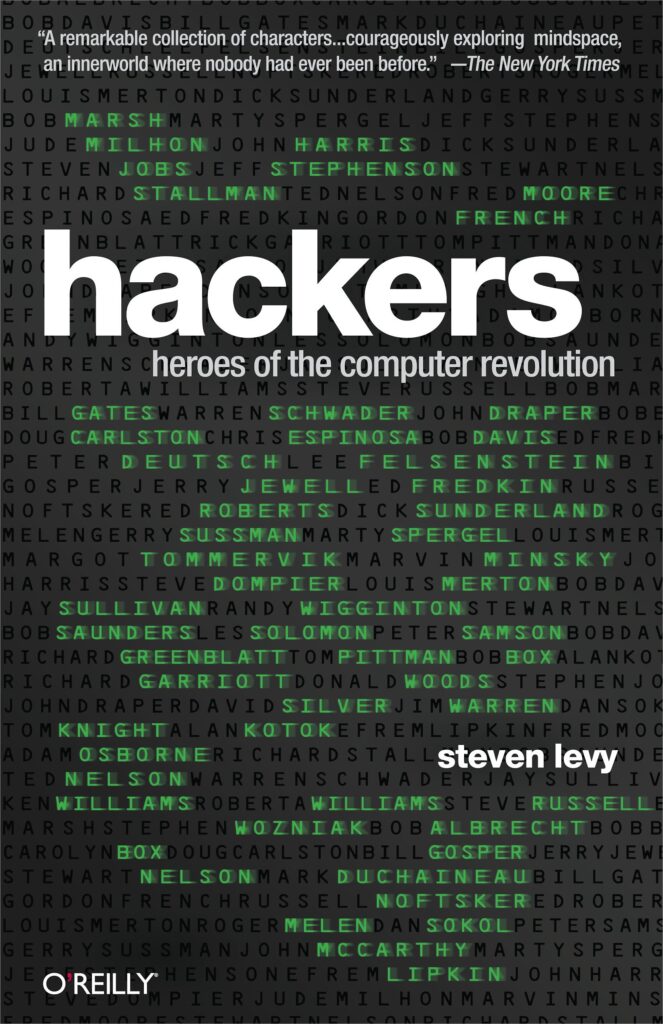
Hackers: Heroes of the Computer Revolution
Steven Levy's classic book traces the exploits of the computer revolution's original hackers from the late 1950s through the early 1980s. These brilliant and eccentric pioneers took risks, bent the rules, and pushed the world in a radical new direction. The story begins in early computer research labs at MIT and leads to the birth of the first home computers.
Levy profiles the imaginative individuals who found clever and unorthodox solutions to computer engineering problems. They shared a set of values known as the hacker ethic, which emphasized open access to information and hands-on learning. The book features groundbreaking profiles of figures like Bill Gates, Steve Wozniak, and Richard Stallman.
This fascinating chronicle captures a seminal period when underground activities blazed a trail for today's digital world. From MIT students accessing early mainframe computers to the DIY culture that spawned the Altair and the Apple II, Levy documents how these risk-takers and explorers conquered a new frontier. The book reveals how the term hacker originally described creative problem-solvers, not computer criminals.
With updated material in the 25th anniversary edition, Hackers remains an essential history of the people, machines, and events that shaped modern computing.
Interesting Facts
Published in 1984: This groundbreaking book first appeared in 1984, documenting the computer revolution just as it was transforming from underground movement to mainstream phenomenon.
Three Generations of Hackers: The book chronicles three distinct waves of hacker culture, from the late 1950s through the early 1980s, tracing how the movement evolved across different eras and locations.
Started with Model Trains: The story begins with MIT's Tech Model Railroad Club, where members used the term "hack" to describe clever improvements to their massive railroad's electronic system before applying it to computers.
First to Define Hacker Ethic: Steven Levy was the first journalist to document and name the "Hacker Ethic," a philosophy emphasizing open access to information, hands-on learning, and judging people by their abilities rather than credentials.
PC Magazine's Best Sci-Tech Book: PC Magazine named Hackers the best science and technology book written in the last twenty years, cementing its status as essential reading for understanding computer culture.
25th Anniversary Edition Adds Updates: The 2010 anniversary edition includes new material with updated interviews from figures like Bill Gates, Mark Zuckerberg, Richard Stallman, and Steve Wozniak, showing where these pioneers ended up.
Reclaims the Word "Hacker": The book explains how "hacker" originally meant creative problem-solvers and innovators, not criminals, documenting a positive tradition that predates the negative connotations.
Covers Spacewar and Early Gaming: You'll discover the origins of video games, including the creation of Spacewar!, one of the first computer games, developed by hackers at MIT.
Features the Homebrew Computer Club: The book profiles the legendary California gathering where electronics hobbyists met to share ideas, a community that helped spawn personal computers like the Altair and Apple II.
Author Receives Life-Changing Notes: Steven Levy reports that hardly a week passes without someone writing to tell him "This book changed my life," a testament to its enduring impact on readers.
Spans Coast to Coast: The narrative travels from MIT's early mainframe labs in Cambridge to California's DIY hardware culture to the game programming scene, capturing the geographic diversity of the movement.
Chronicles the Hands-On Imperative: The book explores how hackers believed essential lessons come from taking things apart to understand how they work, then using that knowledge to create something even better.
Quotes
"Access to computers—and anything which might teach you something about the way the world works—should be unlimited and total."
"All information should be free."
"Mistrust authority—promote decentralization."
"Judgment can be based on hacking alone."
"You can create art and beauty on a computer."
"Computers can change your life for the better."
"Always yield to the Hands-On Imperative!"
"Don't waste time on things you can fix."
"What's the difference between hardware and software? I see no difference."
"The best thing a person could do with a computer was to make it do something it had never done before."
"If you don't have the source code, you don't have the program."
"Reality is what you can get away with."
"The computer world was a place where anyone who had the knack could shine, anyone could take the frontier."
"To be a hacker was to act, and to act was to learn."
"Rules? There are no rules!"
Ratings & Reviews
What do you think?
There are no reviews yet. Be the first one to write one.